
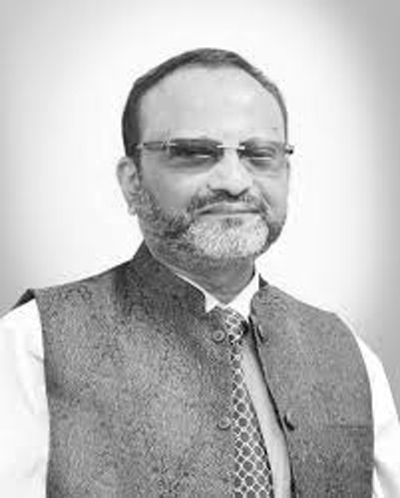
Dr. Niaz Khan
University of Dhaka
Professor Niaz Ahmed Khan, Ph.D. is the Vice Chancellor of the University of Dhaka. He is the immediate past Vice Chancellor (Acting) of Independent University, Bangladesh (IUB), and Professor (Grade 1) and former Chairman of the Department of Development Studies, University of Dhaka.
He holds a Ph.D. from the University of Wales Swansea, UK. He secured first positions (in the first classes) in all public examinations from the Secondary School Certificate (SSC) through Master of Social Sciences (MSS-Public Administration), and received a number of scholarships and recognition for his academic excellence such as the UK Commonwealth Scholarship, University of Wales Pro-VC’s Honorary Fellowship, (Ford Foundation) Asia Fellowship, University of Chittagong Merit Scholarships, Gulmeher Gold Medal Award, and Cumilla Education Board Merit Scholarships, and Australian Leadership Award Fellowship. Dr. Khan subsequently pursued postdoctoral research in the University of Oxford, University College Swansea, and Asian Institute of Technology (AIT). His other professional qualifications include Diploma in Voluntary and Community Organisation (Swansea University; with distinction), Diploma in Personnel Management (Institute of Personnel Management; first class first), and (PG) Certificate in Interpersonal Skills for Volunteers (Lampeter University; with distinction).
Professor Khan’s career reflects a rich blend of academic and practicing development management experiences gained in Bangladesh, Thailand and the UK. Besides serving as Bangladesh Country Representative of IUCN – the International Union for Conservation of Nature (the world’s largest environmental network organization), some of his other senior development management positions include: Senior Programme Coordinator (CHT), UNDP-Bangladesh; Forest and Natural Resource Management Specialist (RETA 5900), Asian Development Bank (ADB); Chairman, Bangladesh Tropical Forest Conservation Foundation; and Manager (Operations), PKSF (Rural employment Assistance Foundation). On the academic and research side, he held such positions as South Asian Fellow, Queen Elizabeth House, University of Oxford; Research Fellow, University of Wales Swansea; Professor of Public Administration, University of Chittagong; Asia Research Fellow, Asian Institute of Technology; Distinguished Visiting Researcher, The American University in Cairo; Senior Academic Adviser, BRAC Institute of Governance and Development; and Distinguished Visiting Professor, Asian University for Women (AUW). He has also extensively consulted for such organizations as the World Bank, United Nations, Asian Development Bank, United States Agency for International Development, Swansea Bay Racial Equality Council (Her Majesty’s Government of UK), and Government of Bangladesh.
Dr. Khan has published prolifically (more than 170 refereed publications including some 50 in Web of Science and/or Scopus indexed journals) on such broad fields as research methodology, environment, natural resource management, and social/community development. Besides his affiliation with numerous professional societies, he is also involved in extensive journal editorial and management roles.
He regularly contributes to high panel government and civil society committees and boards, and acts as resource person, trainer and/or academic adviser to key national military and civil service training institutions including the National Defence College, Defence Services Command and Staff College, Bangladesh Army’s Artillery Centre and School, Bangladesh University of Professionals, Bangladesh Public Administration Training Centre, National Academy of Planning and Development, Bangladesh Foreign Service Academy, Bangladesh Rural Development Academy, and Bangladesh Forest Academy. He has made substantial contribution to several national policy advocacy and advisory processes, and achieved several national and international recognitions – including the Special Recognition Award by the Balipara Foundation, India in recognition of his contribution to the policy and practice of social forestry and natural resource management
Back to Home